
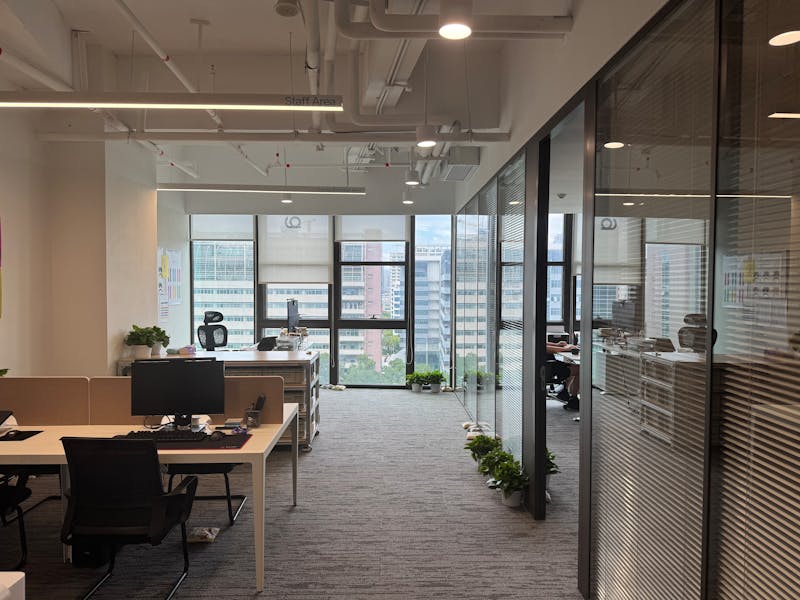
Whether you're opening a new café in Randwick, fitting out office space in Bondi Junction, or converting a warehouse into a retail showroom, the electrical component of your commercial fit-out is one of the most critical — and most commonly underestimated — elements of the project.
A well-planned commercial electrical fit-out ensures your business has reliable power, compliant wiring, energy-efficient lighting, and the data infrastructure to operate smoothly from day one. Get it wrong, and you're looking at costly rework, failed inspections, and potentially delayed opening dates.
This guide covers everything Sydney business owners need to know about commercial electrical fit-outs — from initial planning through to compliance certification.
What Is a Commercial Electrical Fit-Out?
A commercial electrical fit-out covers all the electrical work required to make a commercial space functional for its intended use. This goes well beyond simply "putting in some lights and power points." A typical commercial fit-out includes:
- Power distribution: Main switchboard configuration, sub-boards, circuit design, and power point placement throughout the premises
- Lighting design and installation: General illumination, task lighting, feature lighting, and compliance with energy efficiency standards
- Data and communications cabling: Structured cabling for internet, phone systems, EFTPOS, security cameras, and AV equipment
- Emergency and exit lighting: Mandatory illuminated exit signs and emergency lighting systems that comply with AS 2293
- Fire detection systems: Smoke detectors, heat detectors, and integration with building fire panels
- Mechanical connections: Power supply for HVAC systems, commercial kitchen equipment, and other fixed plant
- Security systems: CCTV, access control, and alarm system wiring
- Switchboard upgrades or new switchboard installation to handle the commercial load
Planning Your Commercial Electrical Fit-Out
1. Engage an Electrician Early
One of the biggest mistakes business owners make is bringing in the electrician after the architect and builder have already locked in the design. Electrical requirements influence floor plans, ceiling designs, wall placement, and even structural elements. Engaging your electrician during the design phase saves money and prevents conflicts with other trades.
At minimum, your electrician should be involved before:
- Floor plans are finalised (power point and data point positions affect furniture layout)
- Ceiling specifications are locked in (lighting, cable trays, and HVAC all compete for ceiling space)
- The builder starts framing walls (running cables after walls are lined means cutting and patching)
2. Understand Your Power Requirements
Commercial spaces have fundamentally different power needs than residential properties. Key considerations:
- Total electrical load: Add up everything that draws power — lighting, computers, servers, kitchen equipment, HVAC, signage, EFTPOS terminals, and any specialised equipment
- Single-phase vs three-phase power: Standard single-phase (230V) is sufficient for most small offices and retail. Commercial kitchens, large HVAC systems, and industrial equipment typically need three-phase (400V) supply
- Future capacity: Don't size your electrical system to exactly what you need today. Build in 20–30% spare capacity for business growth, additional equipment, and seasonal peaks
- Backup power: Consider whether your business needs an uninterruptible power supply (UPS) for servers and critical systems, or a generator connection for essential loads
3. Lighting Design for Commercial Spaces
Commercial lighting is both functional and strategic. The right lighting improves staff productivity, enhances customer experience, and directly impacts your energy bills. Key principles:
Office Lighting
- AS 1680 requires minimum 320 lux for general office areas and 400 lux for detailed task areas
- LED panels (600x600mm) are the standard for offices — they fit into suspended ceiling grids and provide even, glare-free illumination
- Colour temperature of 4000K (neutral white) is ideal for offices — energising without being harsh
- Include task lighting at workstations and dimmable circuits in meeting rooms
Retail Lighting
- Retail lighting is about selling, not just seeing. Use a combination of ambient lighting (general illumination), accent lighting (highlighting products), and feature lighting (drawing attention to displays)
- Track lighting with adjustable heads gives flexibility to redirect light as displays change
- High CRI (Colour Rendering Index) LED lights — 90+ CRI — are essential for retail where product colours need to look accurate
- Consider circadian-friendly lighting schedules if the space has no natural light
Hospitality Lighting
- Restaurants and cafés need warm lighting (2700K–3000K) in dining areas and cooler, brighter lighting (4000K+) in kitchens
- Dimmable circuits are essential — the lighting that works at lunch doesn't work at dinner
- Pendant lights, wall sconces, and decorative fixtures define the ambience. Plan adequate power and mounting points during fit-out
- Outdoor dining areas need weatherproof fittings and separate circuits
4. Data and Communications Infrastructure
Modern businesses run on connectivity. Your electrical fit-out should include structured data cabling that's as carefully planned as the power distribution:
- Cat 6A cabling is the minimum standard for new commercial installations — it supports 10 Gigabit Ethernet and is future-proof for most business needs
- Data points at every workstation — even if you use Wi-Fi, hardwired connections are more reliable for desktops, VOIP phones, and printers
- EFTPOS and POS positions need dedicated data points and power (don't rely on Wi-Fi for payment processing)
- Server room or comms cabinet: A central point for your network equipment, with dedicated power (ideally on a UPS), adequate ventilation, and proper cable management
- Wi-Fi access point locations: Plan ceiling-mounted WAP positions and run data cables to them during fit-out. Retrofitting these later means visible cable runs or expensive ceiling work
Compliance Requirements for Commercial Fit-Outs in NSW
Commercial electrical work in NSW carries more regulatory requirements than residential work. Here's what you need to be across:
Certificate of Compliance Electrical Work (CCEW)
Your licensed electrician must issue a CCEW for all electrical work and lodge it with NSW Fair Trading. This is a legal requirement — without it, your work is technically non-compliant regardless of its quality.
National Construction Code (NCC) Section J — Energy Efficiency
Commercial fit-outs must comply with Section J of the NCC, which sets energy efficiency requirements for building services including lighting. Key requirements include:
- Maximum illumination power density: Measured in watts per square metre, this limits how much energy your lighting can consume. For offices, the limit is typically 7–9 W/m²
- Lighting controls: Occupancy sensors, daylight sensors, and time switches may be required depending on the space type and size
- LED lighting is essentially mandatory — it's practically impossible to meet Section J requirements with fluorescent or halogen lighting
AS 2293 — Emergency Lighting
Commercial premises must have emergency lighting and illuminated exit signs that comply with AS 2293. This includes:
- Emergency lights along escape routes that activate automatically during power failure
- Illuminated exit signs at every exit and change of direction on escape routes
- A minimum 90-minute battery backup for all emergency lighting
- Six-monthly inspections and annual discharge testing (ongoing compliance obligation)
AS 1851 — Fire Detection and Alarm Systems
Smoke and heat detectors must be installed in accordance with AS 1851 and integrated with the building's fire indicator panel (FIP) where applicable. Your electrician will coordinate with the fire services contractor on this.
Electrical Safety for Workers
If you have employees, you're obligated under Work Health and Safety legislation to maintain a safe electrical environment. This includes regular test and tag of portable appliances, RCD testing, and maintaining electrical safety documentation.
Costs of a Commercial Electrical Fit-Out in Sydney
Commercial electrical fit-out costs vary significantly based on the type of space and complexity of the installation. Here are typical ranges for Sydney in 2026:
By Space Type (Per Square Metre)
- Standard office: $80–$150/m² (power, lighting, data, emergency lighting)
- Retail shop: $120–$200/m² (feature lighting, signage power, EFTPOS infrastructure)
- Restaurant or café: $150–$300/m² (commercial kitchen power, extensive lighting design, exhaust systems, outdoor areas)
- Medical or dental practice: $150–$250/m² (specialised equipment circuits, emergency power, additional compliance requirements)
- Warehouse or industrial: $50–$100/m² (high-bay lighting, three-phase distribution, minimal data cabling)
Common Line Items
- New commercial switchboard: $3,000–$8,000
- LED panel lighting (per fitting, installed): $120–$200
- Power point (commercial grade, installed): $180–$300
- Data point (Cat 6A, installed and tested): $200–$350
- Emergency light fitting (installed): $250–$450
- Exit sign (illuminated, installed): $200–$350
- Three-phase power connection (if not existing): $2,000–$5,000+
- Electrical compliance certification: Included with the work (CCEW)
Choosing the Right Electrician for Your Commercial Fit-Out
Not every electrician is suited to commercial fit-out work. Here's what to look for:
- Commercial experience: Ask specifically about commercial fit-out projects they've completed. Residential electricians may not be familiar with commercial compliance requirements, three-phase systems, or coordinating with multiple trades on a construction site
- Proper licensing: Ensure they hold a current NSW electrical contractor licence and appropriate insurance (minimum $20M public liability for commercial work)
- Project management capability: Commercial fit-outs require coordination with builders, HVAC contractors, data cablers, fire services, and other trades. Your electrician needs to work within a broader project schedule
- Detailed quoting: A professional commercial electrician will provide itemised quotes with clear scope definitions, not vague estimates. Ask for a full schedule of works
- After-completion support: Emergency lighting testing, switchboard maintenance, and ongoing fault finding are ongoing needs. Choose an electrician who'll be there after handover
Common Mistakes to Avoid
- Underestimating power requirements: Adding circuits after a fit-out is expensive. It's far cheaper to install spare capacity upfront
- Ignoring energy efficiency compliance: Section J requirements are enforced at certification stage. Non-compliant lighting will need to be replaced before you get occupancy approval
- Cheap data cabling: Poor quality data cabling causes ongoing connectivity issues. Cat 6A installed properly is a one-time cost; troubleshooting bad cabling is an ongoing expense
- Forgetting outdoor and signage power: External signage, outdoor seating areas, and shopfront lighting all need dedicated circuits planned during fit-out
- Not planning for future tenancy changes: If you're a landlord, build flexibility into the electrical infrastructure. Configurable circuits and accessible cable routes reduce the cost of future fit-outs
The Fit-Out Process: What to Expect
Stage 1: Design and Quoting
Your electrician reviews the plans, conducts a site inspection, and provides a detailed quote covering all electrical work. This is the time to discuss lighting design, power requirements, and data infrastructure.
Stage 2: First Fix (Rough-In)
Once demolition is complete and framing is up, the electrician runs cables through walls, ceilings, and floors. This includes power cables, data cables, and fire system wiring. All cable routes are established before walls are lined.
Stage 3: Second Fix (Fit-Off)
After walls are plastered and ceilings installed, the electrician returns to install switches, power points, light fittings, data outlets, and the switchboard. This is the visible stage where everything comes together.
Stage 4: Testing and Certification
All circuits are tested for correct polarity, insulation resistance, earth continuity, and RCD operation. Emergency lighting is commissioned and tested. The CCEW is issued and lodged with NSW Fair Trading.
Frequently Asked Questions
How long does a commercial electrical fit-out take in Sydney?
A typical commercial electrical fit-out takes 2–8 weeks depending on the size of the space and complexity of the work. A small retail shop or office (under 100m²) might take 1–2 weeks for electrical work, while a large restaurant or multi-level office fit-out could take 6–8 weeks. Electrical work is usually coordinated around other trades, so the overall project timeline is often longer.
How much does a commercial electrical fit-out cost in Sydney?
Commercial electrical fit-out costs in Sydney typically range from $80–$150 per square metre for standard office spaces, $120–$200/m² for retail, and $150–$300/m² for hospitality venues like restaurants and cafés. A 200m² office fit-out might cost $16,000–$30,000 for the electrical component. These figures include power distribution, lighting, data cabling, and compliance certification.
Do I need three-phase power for my commercial premises?
It depends on your equipment. Most small offices and retail shops operate fine on single-phase power. However, if you're running commercial kitchens, large HVAC systems, industrial equipment, or multiple high-draw appliances simultaneously, three-phase power provides better load distribution and is often required. Your electrician can assess your total load requirements and advise whether a three-phase supply is necessary.
What electrical compliance certificates do I need for a commercial fit-out in NSW?
You'll need a Certificate of Compliance Electrical Work (CCEW) for all electrical installations, which your licensed electrician must issue and lodge with NSW Fair Trading. Depending on the scope, you may also need an Electrical Safety Certificate for the building's overall electrical system, fire safety certificates for emergency lighting and exit signs, and potentially an energy efficiency compliance report under Section J of the National Construction Code.
Can I do a commercial electrical fit-out in stages while the business is operating?
Yes, staged fit-outs are common, especially for businesses that can't afford extended closures. Your electrician can plan the work in sections, maintaining power to operational areas while upgrading others. This approach takes longer overall but minimises business disruption. Weekend and after-hours work is also an option, though it typically incurs higher labour costs.
Ready to Plan Your Commercial Fit-Out?
A successful commercial electrical fit-out starts with early planning and an experienced electrician who understands commercial requirements. Call Randwick Electrical on 0413 707 758 to discuss your project. We'll review your plans, provide a detailed quote, and coordinate with your builder to deliver on time and on budget.