
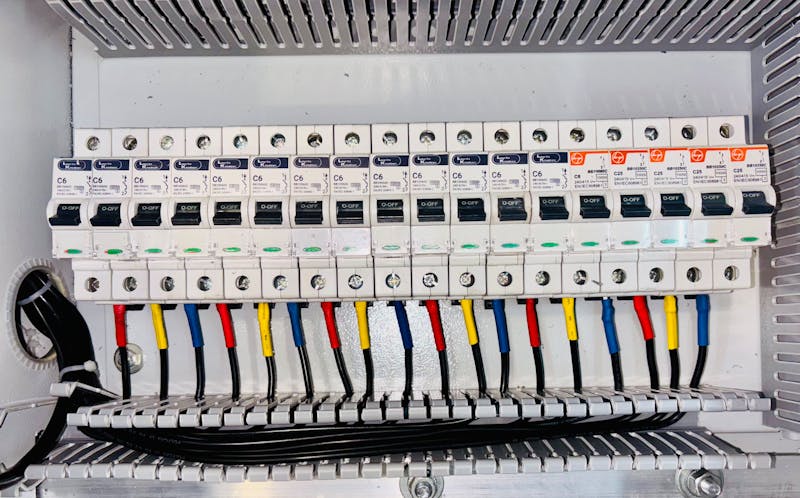
It's one of the most frustrating household problems — your safety switch trips, you reset it, and it trips again. Maybe it happens immediately. Maybe it holds for a few hours, then trips at 2am. Either way, you need to understand what's causing it and whether it's something you can troubleshoot yourself or whether you need an electrician.
What Is a Safety Switch (RCD)?
First, let's be clear about terminology. A safety switch (technically called a Residual Current Device or RCD) is different from a circuit breaker:
- Circuit breakers protect against overloaded circuits and short circuits — they protect the wiring
- Safety switches (RCDs) detect earth leakage current — they protect people from electrocution
A safety switch constantly monitors the current flowing out on the active wire and returning on the neutral wire. If there's a difference (meaning current is "leaking" to earth — possibly through a person), the RCD trips in about 30 milliseconds. That's fast enough to prevent a fatal shock in most circumstances.
Common Causes of Tripping Safety Switches
1. Faulty Appliance
This is the #1 cause. An appliance with a fault (damaged cord, water ingress, failing element, worn insulation) leaks a small amount of current to earth. Common culprits:
- Portable heaters and electric blankets
- Kettles and toasters (water/crumb ingress)
- Washing machines and dishwashers (water + electricity)
- Fridges and freezers (ageing compressors and door seals)
- Power tools with damaged cords
- Phone and laptop chargers (cheap/damaged units)
2. Moisture Ingress
Water and electricity don't mix. After heavy rain, you might find safety switches tripping due to water getting into outdoor power points, garden lighting connections, or the switchboard itself. Bathrooms with poor ventilation can also cause moisture-related trips.
3. Damaged or Deteriorating Wiring
In older homes (particularly pre-1980), cable insulation deteriorates over time. The rubber or PVC sheath cracks and crumbles, allowing small leakage currents that trip the RCD. This is especially common in ceiling spaces where temperature extremes accelerate deterioration.
4. Nuisance Tripping
Sometimes the RCD itself is too sensitive or there are multiple small leakage currents that individually are fine but collectively exceed the 30mA trip threshold. This is more common when a single RCD protects too many circuits.
5. Faulty Safety Switch
Like any device, RCDs can fail. They have a recommended lifespan of about 20 years. An ageing or faulty RCD may trip randomly or fail to hold.
How to Find the Cause
Step 1: Check if it trips immediately
Turn off all the circuit breakers protected by the tripping RCD. Reset the RCD. If it holds, proceed to Step 2. If it trips immediately with all circuits off, the RCD itself may be faulty — call an electrician.
Step 2: Isolate the circuit
Turn the circuit breakers back on one at a time. When the RCD trips, you've found the problem circuit. Note which circuit it is (check the labels on your switchboard).
Step 3: Isolate the appliance
On the problem circuit, unplug everything. Reset the RCD and turn the circuit on. If it holds, plug appliances back in one at a time until the RCD trips — that's your faulty appliance.
When to Call an Electrician
Call a licensed electrician if:
- The RCD trips with all appliances unplugged (indicates a wiring fault)
- The RCD trips immediately every time it's reset
- You can't identify which circuit or appliance is causing the trip
- The tripping is intermittent and you can't reproduce it
- You notice any burning smell, discolouration, or heat at the switchboard
If you're in Sydney's Eastern Suburbs and need help diagnosing a tripping safety switch, call Randwick Electrical on 0413 707 758. We use professional diagnostic equipment to find the fault fast.