
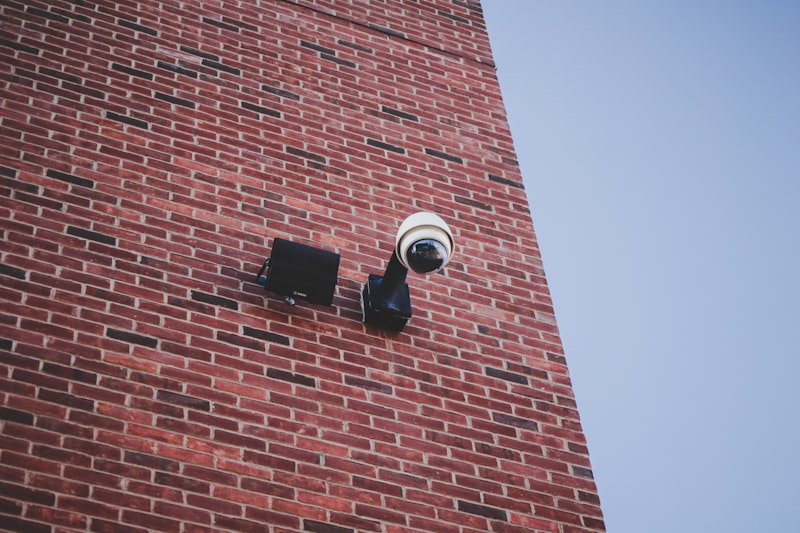
Darkness is a burglar's best friend. Most residential break-ins happen under cover of poor lighting — side passages, unlit backyards, and dark corners around entry points are exactly where intruders feel comfortable working. The good news? Security lighting is one of the most cost-effective crime deterrents you can install, and when done properly, it protects your home without turning your property into a floodlit prison yard.
This guide covers everything you need to know about designing and installing effective security lighting for your Sydney home — from choosing the right fixtures and sensor types to strategic placement that eliminates blind spots and works with security cameras.
Why Security Lighting Works
Burglars are opportunists. They scout properties looking for easy targets — homes where they can approach, break in, and leave without being seen. Effective security lighting removes that cover of darkness and creates three powerful deterrent effects:
- Visibility: Well-lit properties are visible to neighbours, passing traffic, and pedestrians. An intruder working on a lit property is exposed to anyone who happens to look
- Startle effect: Motion-activated lights that suddenly snap on are psychologically jarring. The sudden change from dark to bright signals that the property has active security, and the intruder's first instinct is to flee
- Camera effectiveness: Security cameras are only useful if they can capture clear footage. Good lighting is essential for CCTV — even cameras with infrared night vision produce far better images with supplementary lighting
A well-designed security lighting scheme doesn't just illuminate — it creates layers of light that make your entire property hostile territory for anyone who shouldn't be there.
Types of Security Lighting
Motion-Sensor Floodlights
The workhorse of residential security lighting. These fixtures combine a powerful LED floodlight with a passive infrared (PIR) motion sensor. When movement is detected within the sensor's range, the light switches on at full brightness for a set duration (typically adjustable from 10 seconds to 10 minutes).
- Best for: Driveways, backyards, side gates, garage areas, and any approach to an entry point
- Output: 20W–50W LED (2,000–5,000 lumens) depending on the area to be covered
- Sensor range: Most PIR sensors detect movement at 8–12 metres, with a detection angle of 120°–180°
- Colour temperature: 4000K–5000K (cool white to daylight) for maximum visibility and alerting effect
- Look for: Adjustable sensitivity, detection zone masking, time delay adjustment, and a lux sensor that prevents activation during daylight
Dusk-to-Dawn Lights
Fitted with a photocell sensor, these lights automatically turn on at sunset and off at sunrise. They provide constant low-level illumination throughout the night — no motion trigger required.
- Best for: Front entrances, house numbers, garden paths, and providing a baseline level of light that makes motion-activated lights more effective by contrast
- Output: 5W–15W LED (500–1,500 lumens) — enough for visibility without excessive energy use
- Why they work: A home that's always somewhat lit looks occupied and cared for. A completely dark property at night signals that nobody's home or nobody's paying attention
Smart Security Lights
WiFi-connected lights that integrate with your phone and home automation system. Smart security lights offer features that traditional fixtures can't match:
- App alerts: Get a notification on your phone whenever the light is triggered — you can check the situation from anywhere
- Scheduling: Set different lighting schedules for weekdays, weekends, and when you're on holiday
- Simulated occupancy: Some smart systems can randomise lighting patterns while you're away to make the home appear occupied
- Camera integration: Many outdoor lighting systems now include built-in cameras or integrate with existing CCTV
- Zone control: Adjust sensitivity, brightness, and schedules for individual lights without climbing a ladder
Bollard and Path Lights
Low-level lights along pathways, driveways, and garden borders. While primarily aesthetic, they serve a security function by eliminating dark approach routes and defining property boundaries.
Soffit and Eave-Mounted Downlights
Recessed or surface-mounted LED downlights installed under eaves, directing light downward along the walls of the house. These wash the walls and ground immediately around the home with light, making it difficult for anyone to approach windows or doors without being visible.
Strategic Placement: Where to Install Security Lighting
Effective security lighting is about eliminating dark spots and covering every approach to your home. Think like a burglar — where would you approach? Where would you try to hide?
Front of House
- Front door: A dusk-to-dawn wall light or pendant at the front entrance. This should always be on after dark — it signals occupancy and illuminates anyone at your door
- Driveway: A motion-sensor floodlight covering the driveway and approach to the garage. Mount it high (3–4 metres) to prevent tampering and maximise coverage
- Front path: Low path lights or bollards from the footpath to the front door eliminate dark approach routes
- House number: An illuminated house number ensures emergency services can find you quickly — a practical safety feature beyond security
Side Passages
Side passages between houses are the number one vulnerability for most Sydney homes, especially in the Eastern Suburbs where properties are close together. These narrow passages provide direct access to the backyard and are often completely unlit.
- Install a motion-sensor light at each end of the side passage — one near the front gate and one near the rear
- Use wall-mounted fixtures rather than free-standing — there's less to trip on and they can't be knocked over
- Aim the sensor toward the gate or entry point so the light triggers before the intruder reaches the rear of the property
- Consider a sensor-linked chime that alerts you inside the house when someone enters the side passage
Backyard
- Back door and rear entrance: Motion-sensor floodlight covering the back door, laundry door, and any sliding doors. These are the most common break-in entry points
- Rear fence line: If your backyard backs onto a laneway, park, or neighbouring property, illuminate the fence line to deter anyone scaling the fence
- Shed and outbuildings: A motion-sensor light on the shed or garage prevents tools from being stolen and used to break into the main house
- Back corners: Don't leave dark corners behind garden sheds, water tanks, or large trees. These are perfect hiding spots
Garage and Carport
- Above the garage door: A bright motion-sensor light activates when you arrive home, illuminating the area as you get out of the car
- Inside the garage: Automatic lighting triggered by the garage door opening ensures you never step into a dark garage
- Carport perimeter: Open carports are vulnerable. Soffit-mounted lights along the perimeter keep the entire area lit
Technical Guide: Getting the Installation Right
Sensor Placement and Adjustment
A motion-sensor light is only as good as its sensor placement. Get this wrong and you'll either miss intruders or spend every night watching the light trigger on cats, possums, and passing traffic.
- Mount sensors at 2–3 metres height: Too low and they detect animals; too high and they miss people close to the wall
- Angle sensors slightly downward: PIR sensors work best when detecting movement across their field of view (someone walking past) rather than directly toward them (someone walking at the sensor)
- Use zone masking: Better motion sensors have adjustable detection zones — you can block out areas that cause false triggers, like a hot road, a neighbour's driveway, or a tree branch that moves in the wind
- Avoid pointing sensors at heat sources: PIR sensors detect infrared (heat) radiation. Pointing them at air conditioning units, hot water systems, or dryer vents causes constant false triggers
- Test at night: Walk around the property at night and test every approach angle. Adjust sensitivity and zones until you get reliable detection with minimal false alarms
Wiring and Circuits
Security lighting should be installed on a dedicated circuit from the switchboard, separate from your general lighting and power circuits. Here's why:
- Independent operation: If a circuit breaker trips on your general lighting, your security lights keep working
- Easier control: A dedicated circuit can be protected with its own RCD (safety switch) without affecting other circuits
- Load management: Multiple high-wattage floodlights on a shared circuit can cause overloading — a dedicated circuit eliminates this risk
- Future expansion: Adding more security lights later is simpler when you have a dedicated circuit with spare capacity
All outdoor wiring must use UV-stabilised conduit and be rated for outdoor exposure. Cable burial depths must meet AS/NZS 3000 requirements — 300mm for low voltage and 600mm for 240V mains cable in residential areas.
IP Ratings: Weatherproofing Matters
Sydney weather includes driving rain, salt air (especially in the Eastern Suburbs), and intense UV. Your security light fixtures need appropriate IP (Ingress Protection) ratings:
- IP44: Minimum for covered/sheltered positions (under eaves, covered carport)
- IP65: Required for any fully exposed outdoor location — rain, sprinklers, hose-off. This is the standard for most security floodlights
- IP66: For harsh coastal exposure — recommended for properties in Coogee, Maroubra, and coastal Randwick where salt spray is a factor
Cheap fixtures with inadequate IP ratings will corrode, fill with condensation, and fail within a year or two. Invest in quality fixtures from reputable brands — they cost more upfront but last 5–10 years without issues.
Colour Temperature for Security
Unlike garden lighting where warm white (2700K–3000K) creates ambience, security lighting prioritises visibility and alerting. Use 4000K–5000K (cool white to daylight white) for security fixtures:
- Cool white light produces better facial recognition and colour rendering for security cameras
- The bluer-white tone is psychologically more alerting — it signals "this area is monitored" rather than "welcome, come in"
- Cool white contrasts strongly with the warm interior light spilling from windows, drawing attention to movement outside
Avoiding Common Security Lighting Mistakes
Mistake 1: Over-Lighting
Ironically, too much light can reduce security. Extremely bright lights create deep shadows just beyond their reach — perfect hiding spots. They also cause glare that makes it harder to see into the lit area from a distance. Aim for even, moderate illumination rather than blinding floodlights.
Mistake 2: Lighting Only the Front
Most homeowners focus security lighting on the front of the house. But statistics show that the majority of break-ins occur through rear and side entry points. The back door, laundry window, and side passage need lighting as much as — if not more than — the front entrance.
Mistake 3: Mounting Lights Within Reach
A security light mounted at head height can be unscrewed, covered with a cloth, or simply smashed. Mount all security fixtures at 3 metres or above, using tamper-resistant screws. If the light has to be lower (eave-mounted, for example), use fixtures with vandal-resistant housings.
Mistake 4: Ignoring Sensor Quality
The cheapest motion-sensor lights use basic PIR sensors with a single detection element. These have poor range, can't distinguish between a person and a large animal, and trigger on wind-blown foliage. Invest in fixtures with quality dual-element PIR sensors — they detect the temperature difference between a moving person and the background, reducing false alarms dramatically.
Mistake 5: No Overlap Between Sensors
If you have multiple motion-sensor lights, their detection zones should overlap. A gap between zones means an intruder can move through unlit areas between one light and the next. Walk the perimeter at night and check for dark spots between detection zones.
Security Lighting and CCTV: Working Together
Security cameras and lighting are most effective when designed as a single system. Here's how to make them work together:
- Position lights to illuminate camera fields of view: Ensure the area each camera covers is well lit. Even cameras with IR night vision produce clearer, more useful footage with ambient lighting
- Avoid pointing lights at cameras: A light aimed directly at a camera lens causes lens flare and washout, making the footage useless. Position lights above, beside, or behind cameras — never facing them
- Match colour temperature: Use consistent colour temperature across all security lights. Mixing 3000K and 5000K creates uneven footage that makes identification harder
- Coordinate triggers: Some smart systems can link camera recording to motion-sensor light activation — the camera starts recording the moment the light triggers, capturing the initial approach rather than just the aftermath
Installation Costs (Sydney 2026)
- Single motion-sensor floodlight (supply + install): $250–$500
- Dusk-to-dawn wall light (supply + install): $200–$400
- Basic security package (3–4 fixtures + dedicated circuit): $1,000–$2,000
- Comprehensive package (6–8 fixtures, sensors, dedicated circuit, timer/smart control): $2,500–$4,500
- Smart security system with app control and camera integration: $4,000–$7,000+
- Additional sensor or light added to existing circuit: $150–$350
These prices include quality commercial-grade LED fixtures, not the budget hardware-store options that corrode and fail within a year. The investment in proper fixtures and professional installation pays for itself in reliability and longevity.
Frequently Asked Questions
Does security lighting actually deter burglars?
Yes. Research consistently shows that good exterior lighting is one of the most effective burglary deterrents. A study by the UK College of Policing found that improved street and home lighting reduced crime by up to 21%. Burglars prefer to work undetected — motion-activated lights that suddenly illuminate a dark area create an immediate risk of being seen by neighbours, passing pedestrians, or security cameras. The key is strategic placement that eliminates dark hiding spots around entry points.
Should security lights be on all night or motion-activated?
A combination of both works best. Use low-level dusk-to-dawn lighting (on a photocell sensor) for general ambient illumination around your property — this provides constant baseline visibility. Then add motion-activated floodlights at key entry points (front door, back door, side gates, driveway) that switch to full brightness when movement is detected. The sudden change from dim to bright is more startling and attention-grabbing than lights that are on at full power all night.
How much does security lighting installation cost in Sydney?
A single motion-sensor floodlight, supplied and installed, typically costs $250–$500 depending on the fixture quality and cable run length. A comprehensive security lighting package for a typical Sydney home — covering front, back, and side areas with 4–6 fixtures, sensors, and a dedicated circuit — ranges from $1,500 to $3,500. Smart-enabled systems with app control and camera integration are at the higher end. The cost depends on the number of fixtures, accessibility of wiring routes, and whether new circuits need to be run from the switchboard.
What wattage do I need for security floodlights?
With modern LEDs, you need far less wattage than the old halogen days. A 20W–30W LED floodlight produces 2,000–3,500 lumens — enough to illuminate a driveway or backyard. For a focused area like a side passage or gate, a 10W–15W LED (1,000–1,500 lumens) is sufficient. As a rule of thumb, aim for about 50 lumens per square metre for general security coverage and 100+ lumens per square metre for critical areas like entry doors and camera zones. Avoid going too high — excessive brightness creates harsh glare and deep shadows, which actually reduces visibility.
Can I install security lights myself or do I need an electrician?
In NSW, any electrical work involving connection to mains wiring must be done by a licensed electrician — this includes installing hardwired security lights, motion sensors, and floodlights. It's not just a recommendation; it's the law under the Home Building Act 1989. Unlicensed work voids your insurance, can create serious fire and shock risks, and won't pass an electrical inspection if you sell the property. The only exception is replacing a light globe in an existing fitting or plugging in a portable light. For any new security lighting installation, always use a licensed electrician.
Secure Your Home With Proper Lighting
Don't wait for a break-in to think about security lighting. Call Randwick Electrical on 0413 707 758 for a free assessment of your property's lighting vulnerabilities. We'll identify the dark spots, recommend the right fixtures and placement, and install everything on a dedicated circuit with quality weatherproof fittings built to handle Sydney conditions.